




Description
How to Plant Your Deer Orchard
Included in this starter package:
A native shrub that’s a magnet for white-tailed deer and other wildlife. Its vibrant red stems shine in winter, while tender new growth offers highly desirable/digestible browse that deer eagerly seek out in spring and summer. Growing 6-9 feet tall, this hardy shrub thrives in various soils, including wet areas near streams.
Attracting numerous birds, small mammals and deer, Smooth sumac (Rhus glabra) is a great addition to your wildlife habitat. Grown throughout most of the U.S.(zones 4-10), smooth sumac is a thicket-forming shrub or small tree that provides an essential source of nourishment for wildlife, as white-tailed deer browse on the twigs and foliage while birds feast on its berries.
Bur oaks produce massive acorns in heavy caps covered in “burs” that resembles a small bird’s nest. Dropping in October to November, their hefty size prevents smaller animals from eating them, and therefore they may persist on the ground into early winter and be available for consumption by deer after other more preferred, earlier ripening food is no longer available.
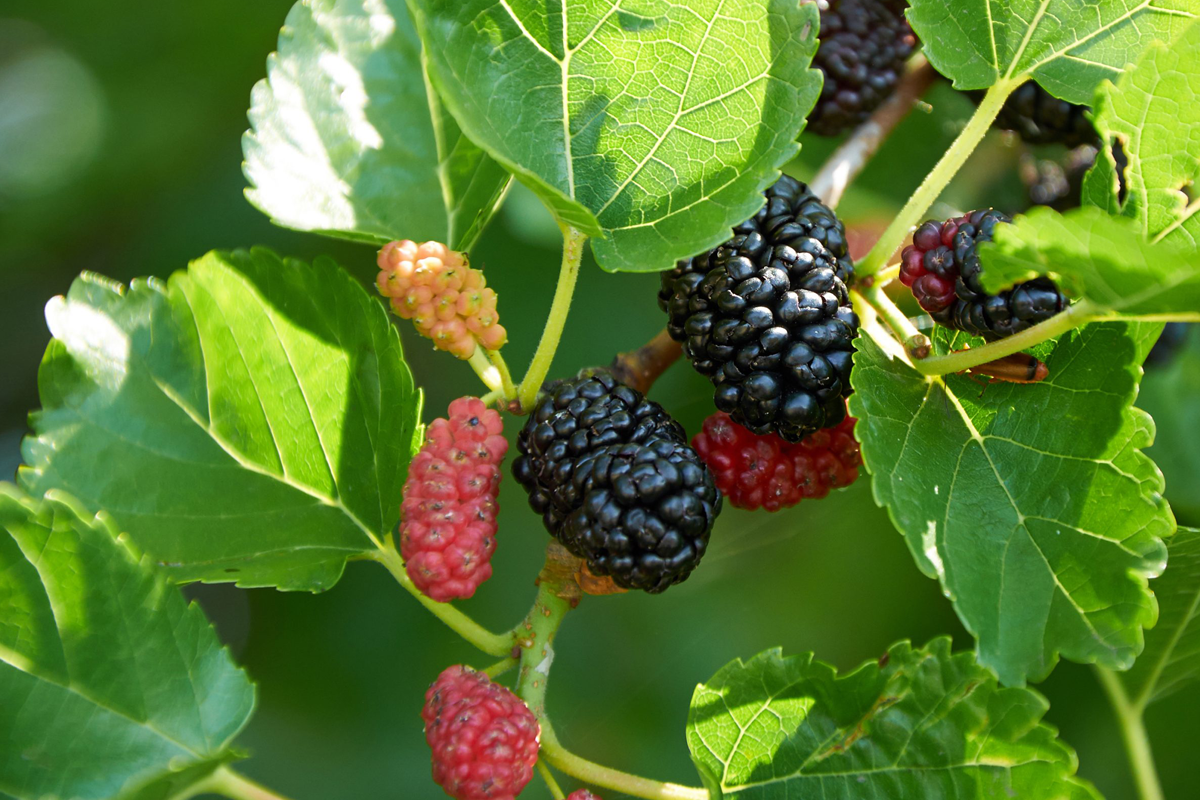
The Mulberry (Morus rubra) is a fast-growing tree that delivers sweet, juicy berries from late spring to early summer—a favorite for white-tailed deer looking to bulk up after winter. In USDA hardiness zones 4-10, it thrives in varied soils and drops clusters of soft, blackberry-like fruit that deer, turkey, and birds flock to.
An old reliable member of the red oak group that produces reliable mast, the Shumard Oak tree for sale grows and matures rather fast compared with most other oaks. Tolerant of a variety of soil conditions as long as it doesn’t stay wet too long, the Shumard Oak tree is a great choice for deer and turkey plots. Full sun to part-day sun suit it well, though brightest conditions will result in heavier acorn crops.


